Anatomy & Physiology for Nurses: A Study Map (2026)
Most Students Study Anatomy Backwards
You've probably tried to "learn anatomy" by memorising bone names, muscle origins and hormone names as disconnected facts — and then watched most of it disappear within a week of the test. That's not a memory problem. It's a sequencing problem. Anatomy and physiology only stick when you learn structure and function together, system by system, instead of memorising parts in isolation.
The Nursing Council of Kenya regulates and sets standards for nursing and midwifery training programmes across the country (nckenya.com), and every accredited programme builds its clinical subjects — pharmacology, medical-surgical nursing, midwifery — on the assumption that students already understand how the underlying body systems work. Get the map right at this stage, and every subject after it becomes easier to reason through instead of memorise. Get it wrong, and you spend the rest of your training re-learning basics under pressure.
There's a specific order to studying the eleven body systems that mirrors how they actually depend on each other — not the order most textbooks list them in. We'll lay that order out below — keep reading.
Why "System by System" Beats "Chapter by Chapter"
Most anatomy textbooks are organised for reference, not for learning sequence. A pedagogical study on redesigning how body systems are taught found that students retained more and engaged more actively when systems were connected through their functional relationships to each other, rather than studied as isolated chapters (Cherif et al., 2012, Education Research International). In practice, that means studying the cardiovascular and respiratory systems close together (because gas exchange links them directly), rather than jumping from skeletal anatomy straight to the endocrine system with no bridge between them.
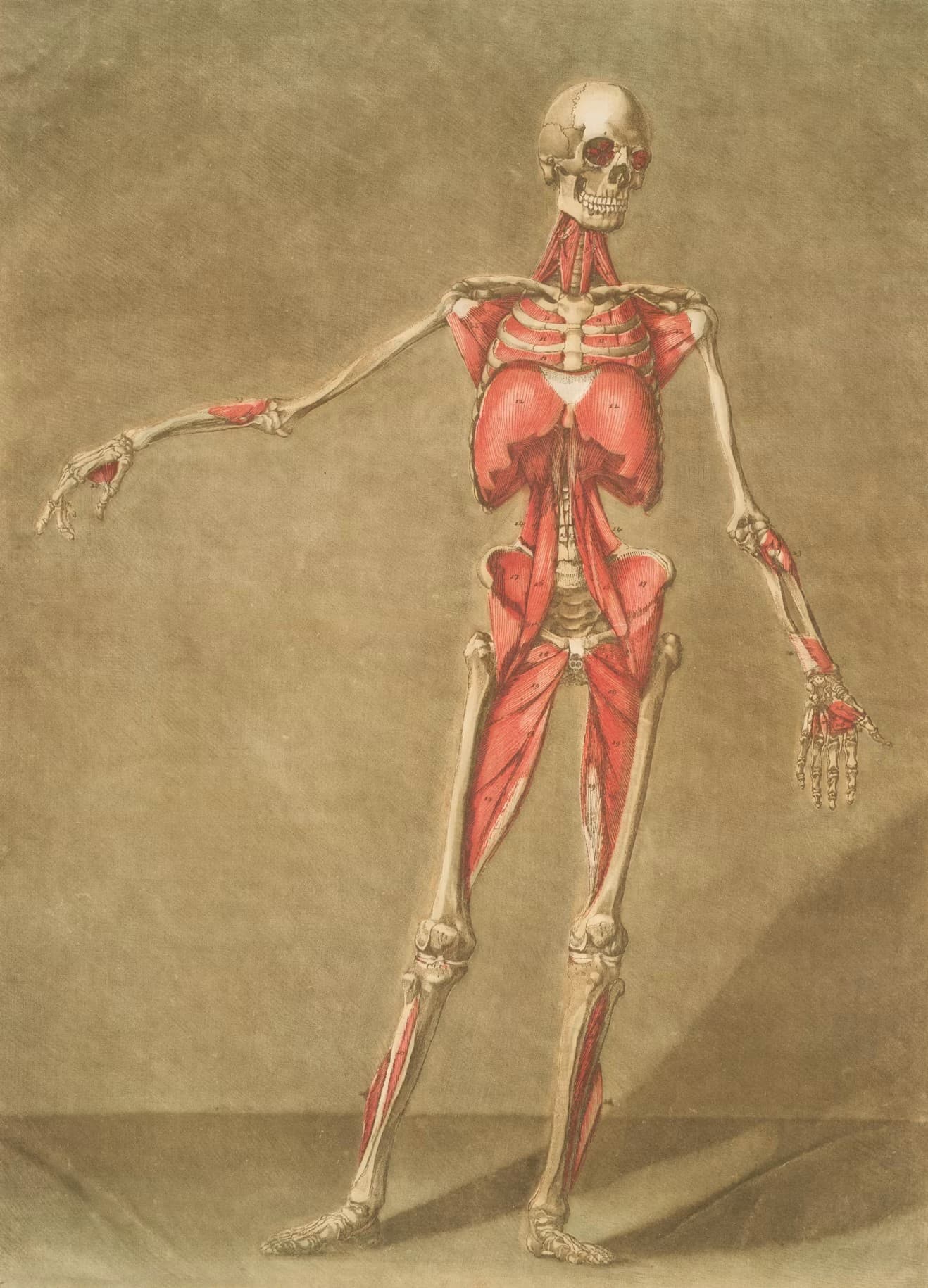
The human body is organised into eleven major organ systems, each built from tissues and organs working toward a shared physiological goal — and nursing practice constantly asks you to reason across more than one of them at once, which is exactly why isolated memorisation fails on exam day.
Test your system-by-system recall with real NCK-style anatomy and physiology questions.
Practise anatomy & physiology questions free on NurseFiti →The Study Map: Eleven Systems, Grouped by Function
Instead of studying the eleven systems in a random order, group them into four functional clusters. Master one cluster before moving to the next.
Cluster 1 — Structure & Movement
- Integumentary system (skin, hair, nails): the body's largest organ system, protecting tissue, regulating temperature and housing sensory receptors.
- Skeletal system: structural support, protection of internal organs, and mineral storage.
- Muscular system: movement, posture and heat production, working directly with the skeletal system through joints and tendons.
Why study these together: nearly every skin, wound-care or mobility question in clinical nursing draws on how these three systems physically interact.
Cluster 2 — Transport & Exchange
- Cardiovascular system: circulates blood, delivering oxygen and nutrients while removing carbon dioxide and waste.
- Respiratory system: brings oxygen into the lungs and removes carbon dioxide — its function is meaningless without the cardiovascular system to transport the gases it exchanges.
- Lymphatic/immune system: drains excess fluid and defends the body against pathogens, working alongside the cardiovascular system's vessels.
Why study these together: almost every emergency and critical-care scenario in nursing training tests your understanding of how gas exchange and circulation fail together, not separately.
Cluster 3 — Regulation & Control
- Nervous system: rapid, electrical control of body functions and response to stimuli.
- Endocrine system: slower, hormonal control of metabolism, growth and homeostasis — working in parallel with the nervous system to regulate the same target organs on different timescales.
Why study these together: pharmacology and pathophysiology repeatedly test how a drug or disease shifts the balance between nervous and hormonal control of the same process.
Cluster 4 — Intake, Processing & Output
- Digestive system: breaks down food into absorbable nutrients.
- Urinary system: filters blood and removes waste as urine, maintaining fluid and electrolyte balance.
- Reproductive system: structures and processes involved in reproduction, distinct in male and female anatomy.
Why study these together: fluid balance, nutrition and elimination are assessed as a connected picture in almost every adult and maternal health scenario you'll face on placement.
> [!NOTE]
> Last verified: September 2026. This is a study-organisation guide, not a clinical reference — always confirm specific physiological values and clinical ranges against your institution's approved textbook and the Nursing Council of Kenya's current training standards at nckenya.com.
What Each Cluster Tends to Test in Practice
Knowing how a cluster is usually examined helps you study toward the actual skill being assessed, not just the raw content:
- Structure & Movement questions often present a mobility, wound or pressure-injury scenario and ask you to identify which structure or layer is affected, or which intervention protects skin integrity.
- Transport & Exchange questions frequently combine a vital-signs pattern with a symptom (e.g. shortness of breath plus a specific oxygen saturation) and ask you to reason about which system is failing and why.
- Regulation & Control questions often test cause-and-effect: a hormonal or neurological change, and what physiological response follows from it.
- Intake, Processing & Output questions commonly link a fluid-balance or nutrition scenario to a lab value or output measurement, testing whether you can connect the number to the underlying system.
Recognising these patterns early means you can practise the reasoning, not just the recall — which is exactly what separates a strong pass from a narrow one.
The Study Technique That Actually Works: Structure-to-Function Mapping
Once you know the four clusters, use this three-step technique for every system:
- 1Draw the structure first, roughly. You don't need artistic skill — a rough labelled sketch of the heart's four chambers forces you to notice relationships (which chamber pumps to the lungs vs the body) that a paragraph of text hides.
- 2Attach one function to each structure, in your own words, not the textbook's. If you can't explain what a structure does without re-reading the definition, you've memorised the name, not the concept.
- 3Ask "what happens if this fails?" This is the step most students skip, and it's the one the NCK exam rewards most — because most exam questions are really asking you to predict a consequence, not recite a definition.
Which statement correctly describes how the respiratory and cardiovascular systems work together in gas exchange?
That third step is exactly why case-based practice questions matter more than flashcard repetition alone once you've learned the basic structures — you need to rehearse predicting consequences, not just recalling facts. NurseFiti's question bank pairs every anatomy and physiology item with a full rationale explaining why each wrong option is wrong, not just which option is right. Try a free question set on your next system →
Fitting the Study Map Into a Realistic Revision Schedule
If you're working through this while also preparing for the NCK licensure exam, don't try to "finish anatomy" before starting anything else — that's how most students run out of time. Instead:
- Spend your first pass moving cluster by cluster, spending roughly the same number of days on each of the four clusters rather than letting one system swallow your whole week.
- Revisit Cluster 2 (Transport & Exchange) more often than the others — it underpins the highest proportion of clinical scenario questions across cardiovascular, respiratory and critical-care topics.
- Pair every system with at least one practice question set before moving on, instead of saving all practice for the end of your revision.
For a broader view of how to sequence your overall exam preparation once your anatomy foundation is solid, see our complete NCK exam preparation guide. And once you're applying anatomy and physiology to real patient scenarios on placement, our guide to generating defensible nursing care plans shows exactly how assessment findings tie back to the systems you're studying now.
The Payoff Is Bigger Than One Exam
A solid system-by-system foundation doesn't just help you pass one unit test — it is what lets you reason through unfamiliar clinical scenarios instead of guessing, because you understand why a symptom points to a particular system failing rather than just recognising it from a memorised list. That's the difference examiners are testing for, and it's the difference patients actually depend on once you're the nurse at the bedside.
Turn your study map into exam-ready recall
Practise system-by-system anatomy and physiology questions with full rationales, free on NurseFiti.
Start your free NurseFiti account — no credit card requiredShare your own system-by-system study sketches with other Kenyan nursing students in the NurseFiti WhatsApp community — teaching a concept to someone else is one of the fastest ways to find the gaps in your own understanding.
---
Share This Post
> "Found a much better way to organise anatomy & physiology revision — groups the 11 body systems into 4 clusters by how they actually work together, instead of studying them as random chapters. Way easier to remember. nursefiti.co.ke/blog/anatomy-physiology-nursing-study-map"
---
Sources & References
- Nursing Council of Kenya. nckenya.com — regulatory standards for nursing and midwifery training in Kenya.
- Cherif, A.H., Movahedzadeh, F., Adams, G.E., Dunning, J. Redesigning Human Body Systems: Effective Pedagogical Strategy for Promoting Active Learning and STEM Education. Education Research International, 2012.
Always verify current NCK training standards and curriculum requirements directly at nckenya.com.

